The Iris Nebula
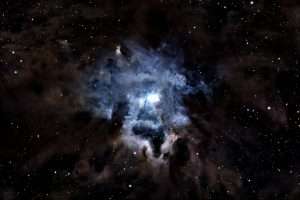
The Iris Nebula (NGC 7023) is a beautiful reflection nebula located in the constellation Cepheus. Known for its striking blue hues and intricate dust structures, it is a popular target for astronomers and astrophotographers. I created this image using my Celestron Edge 800 HD telescope and ASI294mm pro camera from 76x 3-minute exposures. This gave a total integration time of 3.9 hours. I then processed the data in Pixinsight.
Key Characteristics
- The Iris Nebula is a reflection nebula its glow comes from starlight scattered off interstellar dust rather than being produced by ionized gas.
- The nebula is approximately 1,300 light-years from Earth and spans about 6 light years.
- The central star of the Iris Nebula is a hot, young star called HD 200775. A B-type star that provides the energy responsible for the nebula’s glow.
- The nebula glows predominantly blue due to light scattering by fine interstellar dust particles, similar to why Earth’s sky appears blue, Surrounding the central blue region are darker, dense clouds of dust, adding depth and contrast to the nebula’s appearance. You can see in some areas a faint reddish hue which is caused by emissions from complex hydrocarbons known as polycyclic aromatic hydrocarbons (PAHs).
The structure of the Iris Nebula
- Reflection Nebulae: The Iris Nebula is an excellent example of how starlight interacts with interstellar dust. Its study helps astronomers understand the composition and properties of cosmic dust.
- Star Formation: The region contains dense molecular clouds, indicating ongoing or future star formation activity. HD 200775 is a young star that is still evolving, making the nebula a valuable laboratory for studying early stellar evolution.
- Dust Properties: The dense clouds around the nebula provide insights into the size, shape, and composition of interstellar dust grains.
Cultural and Aesthetic Appeal
- The Iris Nebula gets its name from its resemblance to the iris of a flower. Its intricate structure and interplay of light and shadow have made it a favourite for astrophotographers.
The Iris Nebula (NGC 7023) is a stunning and scientifically rich object, showcasing the beauty of the cosmos, while offering a glimpse into the mysteries of interstellar dust and star formation. Its serene blue glow contrasts dramatically with the dark clouds that surround it, making it a captivating sight in the night sky.