Images: Nebula

The Jellyfish Nebula
The Jellyfish Nebula IC443 IC 443 or Sharpless 248, is a supernova remnant located in the constellation Gemini. It is approximately 5,000 light-years away from Earth. The nebula gets its name from its resemblance to a jellyfish, with its tentacle-like structures extending outward. Key Features: Origin: The Jellyfish Nebula is the result of a supernova explosion that occurred roughly 30,000 years ago. The explosion left behind a rapidly expanding shell of gas and dust. Structure: The nebula spans about 70 light-years across and is characterized by its complex structure, including filaments and shock waves. These features are the result of…
The Flame Nebula
The Flame Nebula (NGC 2024) The Flame Nebula (NGC 2024) is a glowing region of gas and dust located in the constellation Orion, near the bright star Alnitak, the easternmost star in Orion’s Belt. It is part of the Orion Molecular Cloud Complex, a rich star-forming region that also includes the Horsehead Nebula and Orion Nebula. Here’s a detailed look at the Flame Nebula: About NGC 2024 The Flame Nebula is an emission nebula, meaning its glow comes from ionized gas energized by ultraviolet radiation from nearby stars. Location and Distance: It lies about 1,350 light-years from Earth. It is…
The Christmas Tree Cluster
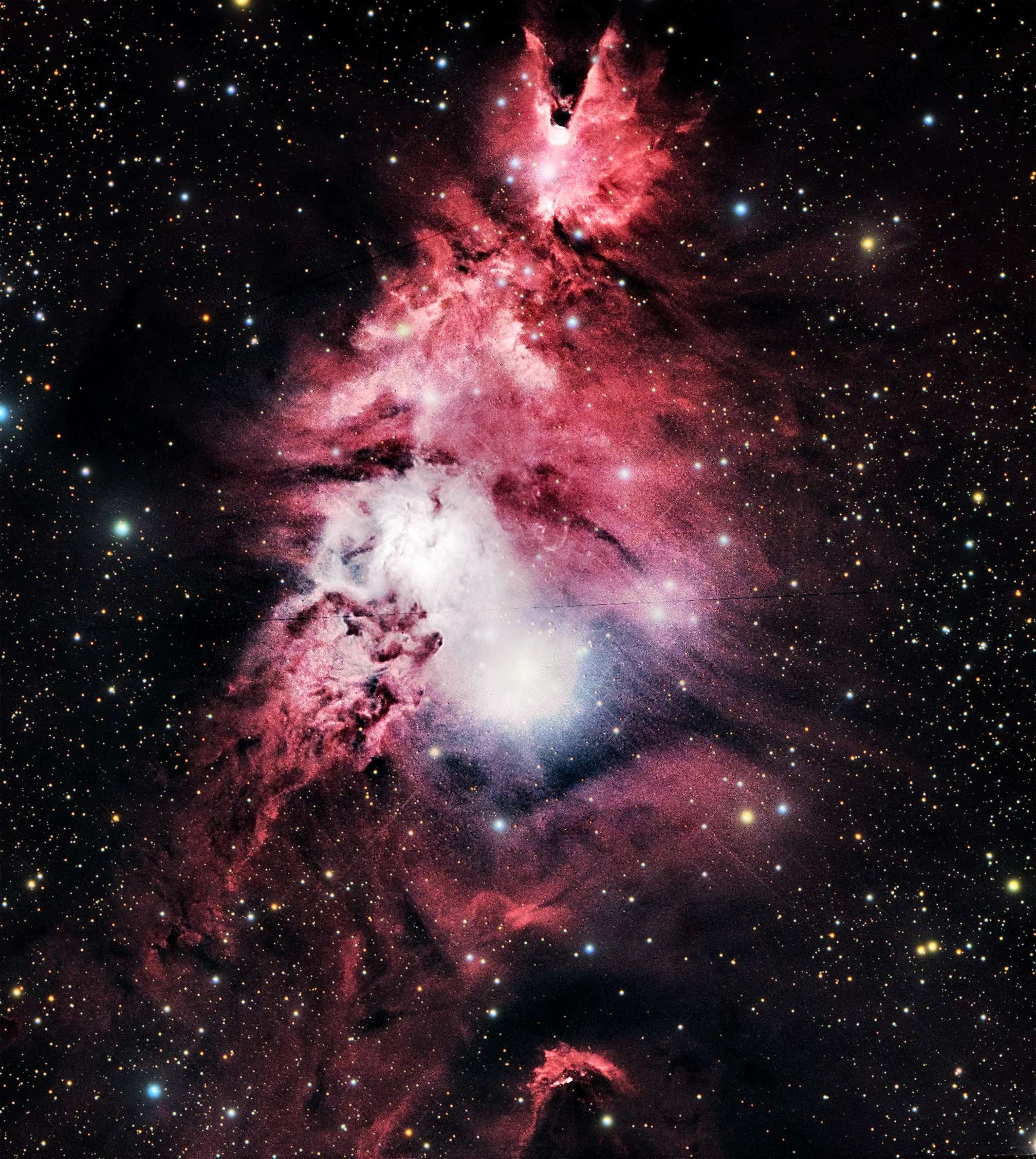
The Christmas Tree Cluster in Monoceros The Christmas Tree Cluster, officially designated as NGC 2264, is an open cluster of stars in the constellation Monoceros. It is part of a complex region that includes a nebula and star-forming regions, and it gets its name because the arrangement of its stars resembles the shape of a Christmas tree when viewed from Earth. Key Facts about the Christmas Tree Cluster: Distance: Approximately 2,500 light-years from Earth. Age: The cluster is relatively young, about 3–5 million years old. Size: The cluster spans about 20 light-years across. Components: The Cone Nebula forms part of…
The Trifid Nebula
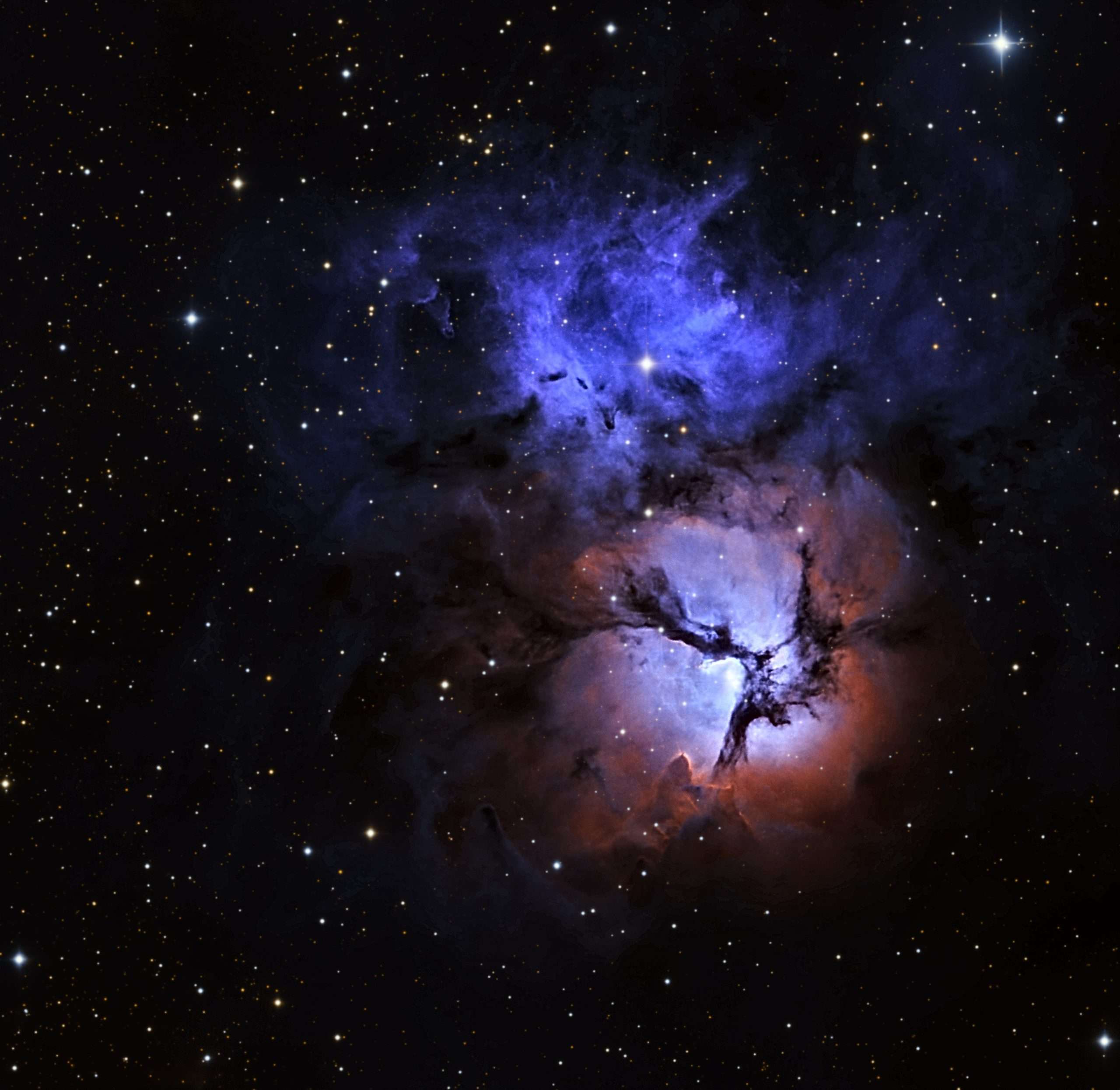
The Trifid Nebula Key Features of the Trifid Nebula The Trifid Nebula (Messier 20, or M20) is a complex Nebula in the constellation Sagittarius. Known for its striking combination of emission, reflection, and dark nebulae, it is a favourite among astronomers and astrophotographers (see the full image here). Type: The Trifid Nebula is a combination nebula, consisting of: Emission nebula: Glowing red regions from ionized hydrogen gas energized by ultraviolet radiation from nearby hot stars. Reflection nebula: Bluish regions where starlight is scattered by surrounding dust particles. Dark nebula: Opaque regions of dense dust obscuring the background light, creating the…
The Iris Nebula
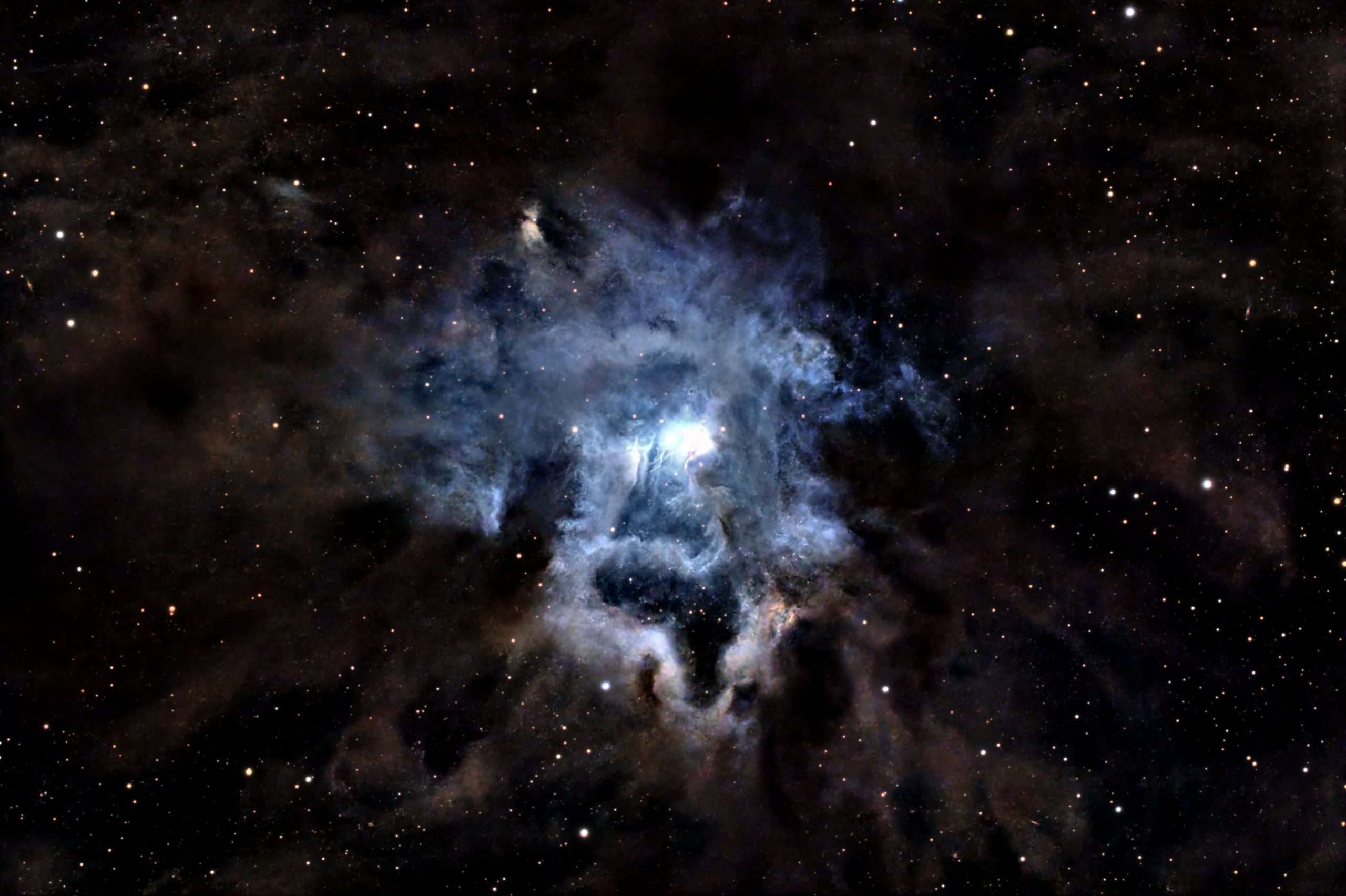
The Iris Nebula The Iris Nebula (NGC 7023) is a beautiful reflection nebula located in the constellation Cepheus. Known for its striking blue hues and intricate dust structures, it is a popular target for astronomers and astrophotographers. I created this image using my Celestron Edge 800 HD telescope and ASI294mm pro camera from 76x 3-minute exposures. This gave a total integration time of 3.9 hours. I then processed the data in Pixinsight. Key Characteristics The Iris Nebula is a reflection nebula its glow comes from starlight scattered off interstellar dust rather than being produced by ionized gas. The nebula is…
Carina Nebula
The Carina Nebula The Carina Nebula (NGC 3372) is one of the largest, brightest, and most dynamic star-forming regions in the Milky Way. It is in the constellation Carina and is a spectacular area of gas, dust, and young stars. Key Characteristics The Carina Nebula is a giant emission nebula and stellar nursery, known for active star formation and massive, luminous stars. It lies about 8,500 light-years away from Earth and spans roughly 460 light-years across. This makes it one of the largest nebulae visible in our galaxy. The nebula is a vibrant mix of red, pink, and orange hues,…
Rho Ophiuchi
Rho Ophiuchi The Rho Ophiuchi complex is a molecular cloud and star-forming region, containing areas of both dark nebulae and reflection nebulae. It is also home to emission nebulae, where ionized gas glows due to energetic radiation. This image was created from six hours of RGB data from Telescope Live. The FITS images had several annoying defects but I was able to remove these during processing. Pixinsight was used to preprocess, stack, and stretch the images. Some details about Rho Ophiuchi Location and Distance: It is located about 394 light-years from Earth, making it one of the closest star-forming regions to…
Rosette Nebula
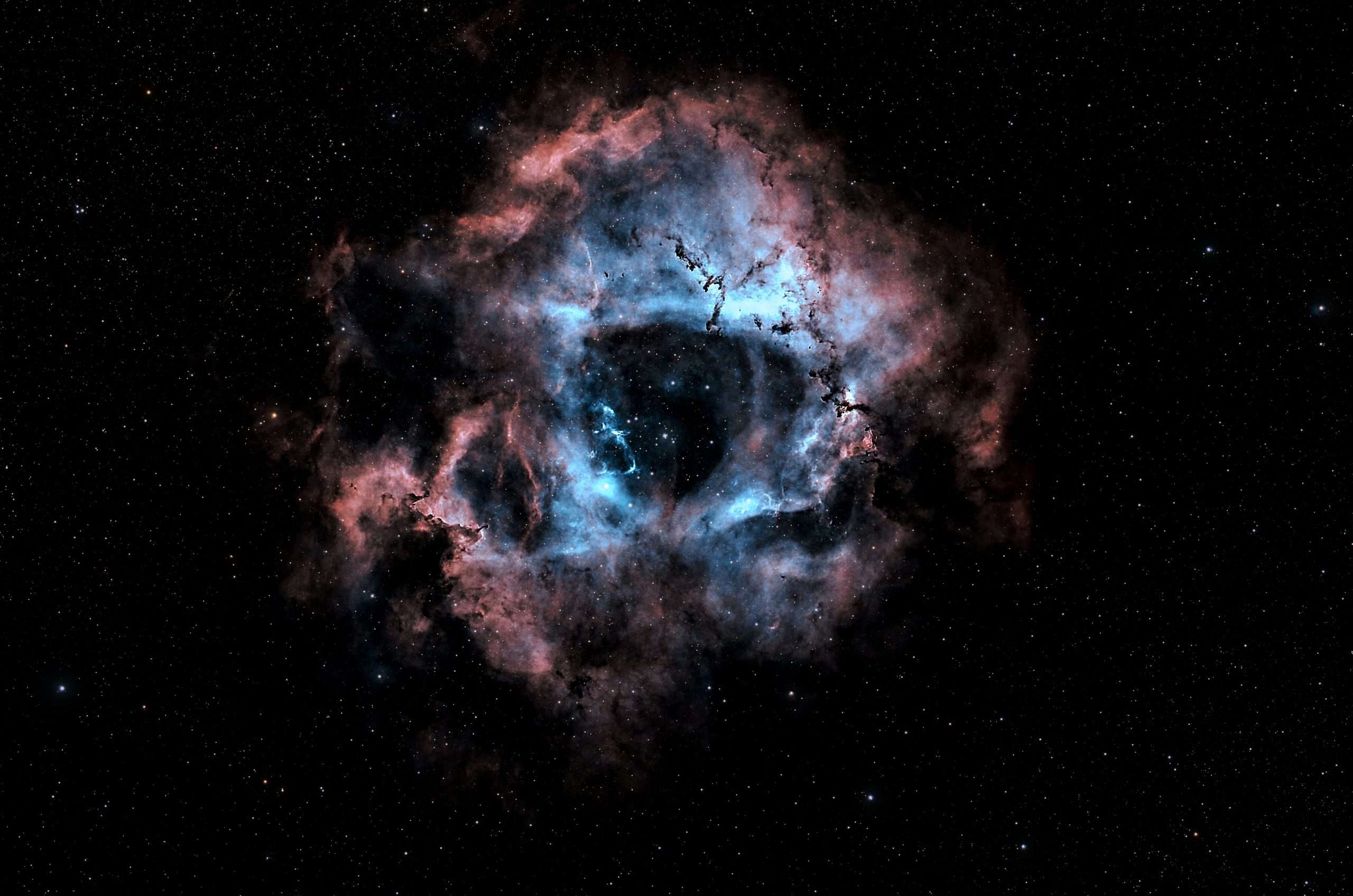
The Rosette Nebula Key Features of this Nebula The Rosette Nebula (NGC2237) is a large, circular region of ionized hydrogen gas and dust in the constellation Monoceros. And near the border with the constellation Orion. It is an emission nebula and glows because of the intense radiation of nearby stars, which ionises hydrogen gas. Key Features of the Nebula: Distance: The nebula is approximately 5,000 light-years away from Earth. Size: It spans about 130 light-years across, making it one of the largest observable nebulae in the sky. Star Formation: At its centre is a cluster of young, massive stars known as…
Tarantula Nebula
The Tarantula Nebula (also known as 30 Doradus) is a giant star-forming region in the Large Magellanic Cloud (LMC), a satellite galaxy of the Milky Way, about 160,000 light-years away from Earth. Located in the constellation Dorado, the nebula is one of the largest and most active star nurseries in our local group of galaxies, spanning about 1,000 light-years across.
The Orion Nebula
The Orion Nebula M42 Characteristics The Orion Nebula (Messier 42) is located in the constellation Orion, approximately 1,344 light-years from Earth. The nebula spans about 24 light-years, making it one of the brightest and most massive star-forming regions visible in the night sky. Star Formation: The Orion Nebula is a stellar nursery, where new stars are born from vast clouds of gas and dust. It contains young, hot stars that emit powerful radiation, shaping the surrounding nebula. Trapezium Cluster: At its core is the Trapezium Cluster, a group of four massive, young stars that illuminate much of the nebula. Unfortunately,…