Evening Sunset
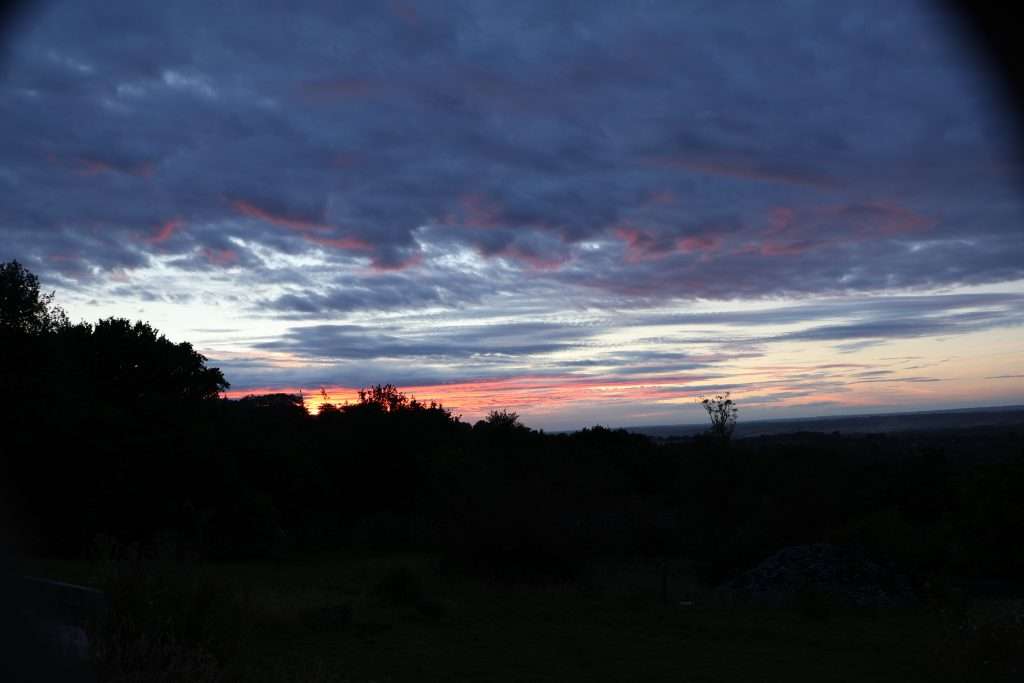
We are fortunate being so high up on a hill we have wonderful views of the skies and sunsets are often spectacular, this night all of the clouds were taking on a red hue, the photo probably does not do it justice!

Astro and Wildlife Images
Astro and Wildlife Images

We are fortunate being so high up on a hill we have wonderful views of the skies and sunsets are often spectacular, this night all of the clouds were taking on a red hue, the photo probably does not do it justice!
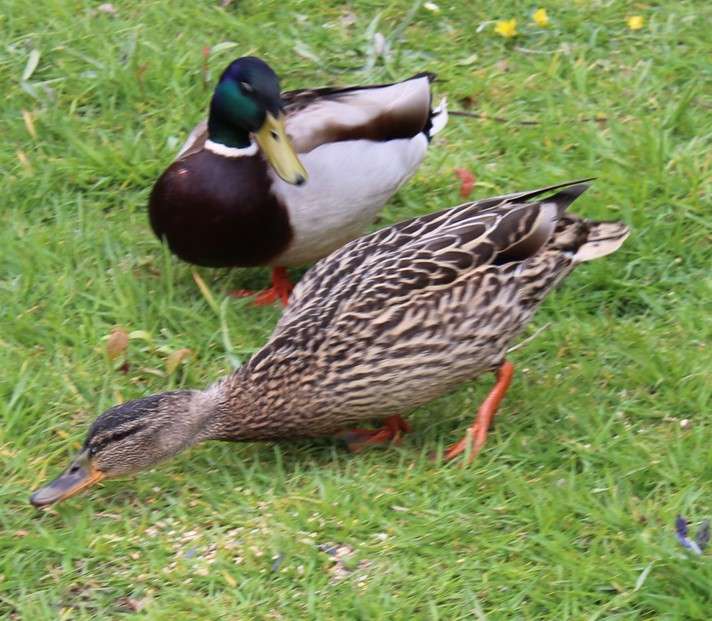
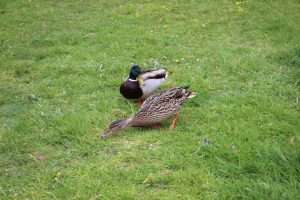
Every year a male and female mallard fly back to our pond and stay to breed. They have become quite tame and come to us for seeds every day. Most years they bring us 6-8 ducklings to show off, but only one or two survive. This is very typical. I think the ‘children’ are also coming back as each year we seem to have a couple more.
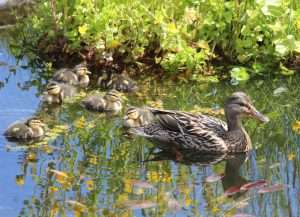
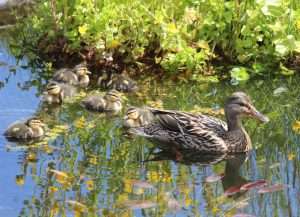
Here is a picture of Mom with babies earlier in the year:
Mallard ducks (*Anas platyrhynchos*) are one of the most recognizable and widespread duck species in the world. Known for their distinctive coloring and adaptability, they are the ancestors of most domestic duck breeds. Here are some key facts about Mallard ducks.
1. Appearance:
– Males (Drakes): The male Mallard is easily identified by its iridescent green head, bright yellow bill, and a distinctive white neck ring. They have a chestnut-brown chest, gray body, and a distinctive blue patch (speculum) bordered by white on their wings.
– Females (Hens): Female Mallards are mottled brown with an orange bill marked with black. They have a subtler appearance, which provides camouflage while nesting. This is referred to as ‘cryptic’.
– **Both Sexes: Both males and females have bright orange legs and the blue wing speculum.
2. Habitat: Mallards are highly adaptable and can be found in a variety of wetland habitats, including ponds, lakes, rivers, marshes, and even urban parks. They are native to the Northern Hemisphere but have been introduced to other regions, including Australia and New Zealand.
3. Diet: Mallards are omnivorous and have a varied diet that includes aquatic vegetation, insects, small fish, and crustaceans. They are dabbling ducks, meaning they feed mainly on the water’s surface or by tipping forward to reach underwater plants. We feed them wild bird seeds, as bread is not good for ducks. We have seen them ducking for insects and also pinch a couple of small fish!
4. Behavior:
– Social Structure: Mallards are generally social birds that can be seen in pairs or small groups. Outside of the breeding season, they often form large flocks.
– Mating: Mallards are seasonally monogamous, forming pairs in the fall and winter. Yet somehow, the female seems to turn up with a male and both appear fairly tame, perhaps she tells them we are safe! The males court females through displays that include head-bobbing and vocalizations. We often see two or three males chasing after our female, and have also seen our female ‘hiding’ in the reeds with one of the males to avoid the others!
– Vocalizations/calls: Mallards are known for their quacking, especially the females. Males produce softer, raspy calls. They kick up quite a row when there is danger around, such as foxes!
5. Breeding: Female Mallards build their nests on the ground, often near water but sometimes in more unexpected places like gardens or rooftops. They lay 8-13 eggs, which hatch after about 28 days. The ducklings are precocial, meaning they are born with down feathers and are able to swim shortly after hatching. However, they are clearly in need of a lot of help until they are able to fly for themselves, which will be late summer. Our regular female seems to have got better at looking after them over the years, but still loses a lot to all the predators around, which includes Herons and foxes.
6. Migration: Mallards are partially migratory, with northern populations migrating south in the winter. They have strong flight capabilities and are known to travel great distances during migration. As we live in the South of England, they are with us most of the year.
7. Conservation Status: Mallards are classified as a species of Least Concern by the IUCN. However, they face challenges from habitat loss, pollution, and hybridization with other duck species, particularly in areas where domestic ducks are released into the wild.
Mallards play a vital role in their ecosystems as both prey and as herbivores that help maintain aquatic vegetation. They are also important for birdwatching, hunting, and as a model species in ecological studies.
Mallard ducks are a familiar and charismatic species that thrive in a variety of environments. Their adaptability has made them a successful species, closely associated with human-altered landscapes. We are so lucky that they seem happy to live with us for most of the year, and keep returning. I think it is fair to say they are relatively easy to tame, compared to other wild birds – they come up every day from the pond to our lawn to ask for seeds.
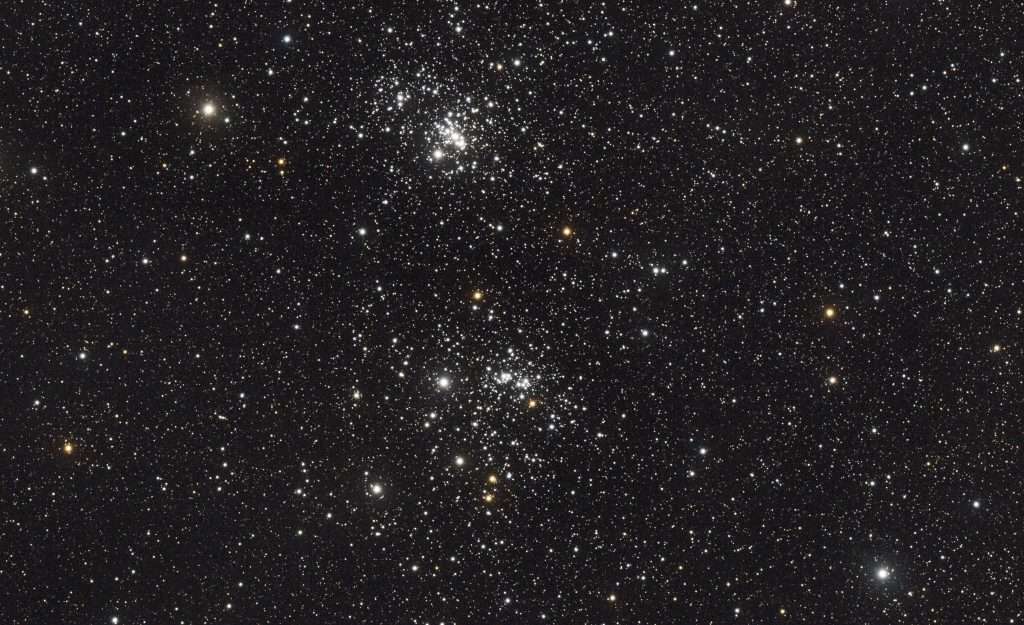
The Double Cluster or Caldwell 14 are two open star clusters NGC 869 and NGC 884 in the constellation Perseus. They are among the most famous and beautiful clusters visible in the night sky, known for their bright, densely packed stars.
Here are key details about the Double Cluster:
This was the first light object I viewed with a Bresser 127L achromatic refractor some years ago and I returned to it several years later to take this image:
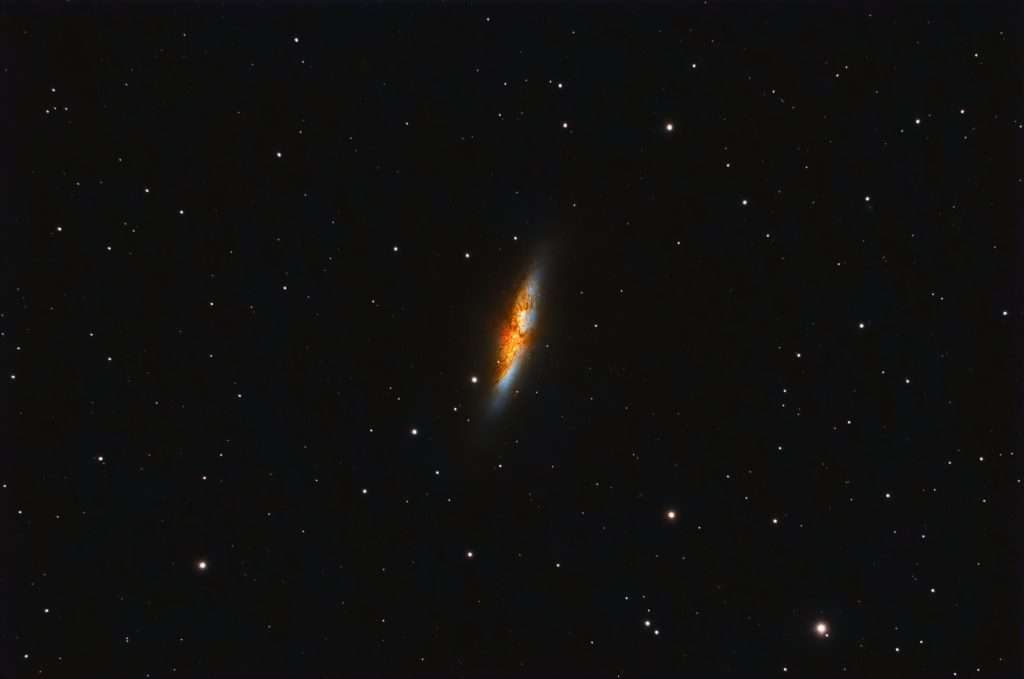
Messier 82 (M82), also known as the Cigar Galaxy, is a starburst galaxy located in the constellation Ursa Major. It is about 12 million light-years away from Earth and has a cigar-like shape when viewed from Earth. This is how it got its name.
M82 is a fascinating object because it gives insights into the processes driving star formation and the impact of superwinds on galaxy evolution. Its vibrant activity and close proximity make it an excellent subject for study across multiple wavelengths, revealing the dynamic nature of starburst galaxies.
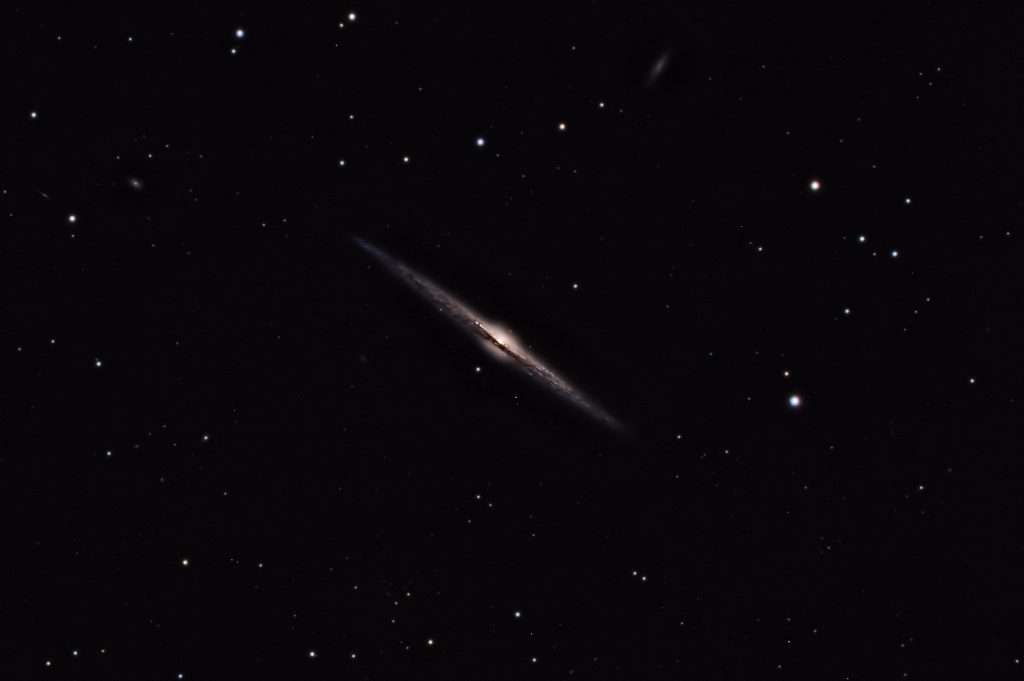
The Needle Galaxy, also known as NGC 4565, is a stunning spiral galaxy located about 30 to 50 million light-years away in the constellation Coma Berenices. It was discovered by the astronomer William Herschel in 1785 and is considered one of the finest examples of an edge-on spiral galaxy, which is why it is often referred to as the Needle Galaxy due to its slender, needle-like appearance.
NGC 4565 is part of the Coma I Group, a collection of galaxies that includes other nearby members such as NGC 4559 and NGC 4725.
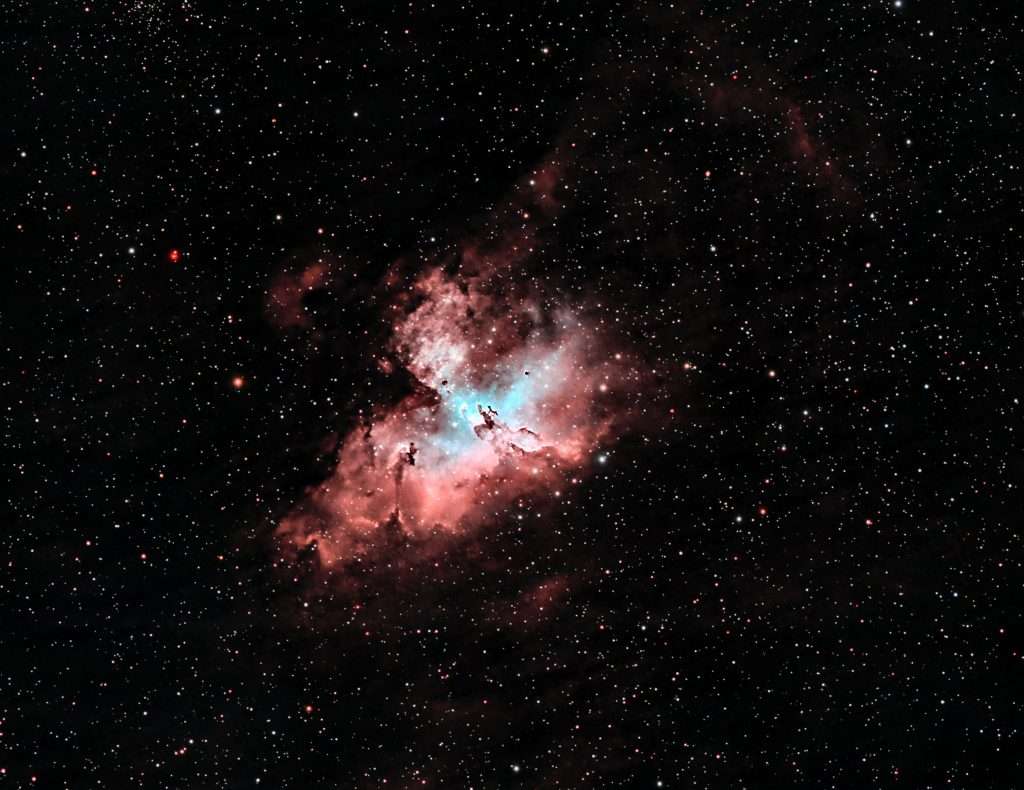
The Eagle Nebula (M16) is a young open star cluster and is surrounded by a region of active star formation. It is one of the most famous nebulae in the sky. Primarily because of its iconic feature, the ‘Pillars of Creation’, made famous by images from the Hubble Space Telescope.
The most famous feature of the Eagle Nebula is the Pillars of Creation, towering columns of gas and dust where new stars are being born. The Pillars of Creation are about 4-5 light-years long and they are being eroded by the intense ultraviolet light and stellar winds from massive stars.
This was a difficult target to image because of its low altitude in the UK. It is only 26° above the horizon at transit on the 26th May 2024. Over two nights due to poor weather and only moderate seeing I managed only 90 minutes of imaging time and had to discard close to one third of the captures. On the plus side I used my fully portable rig with its own intranet to acquire the target.
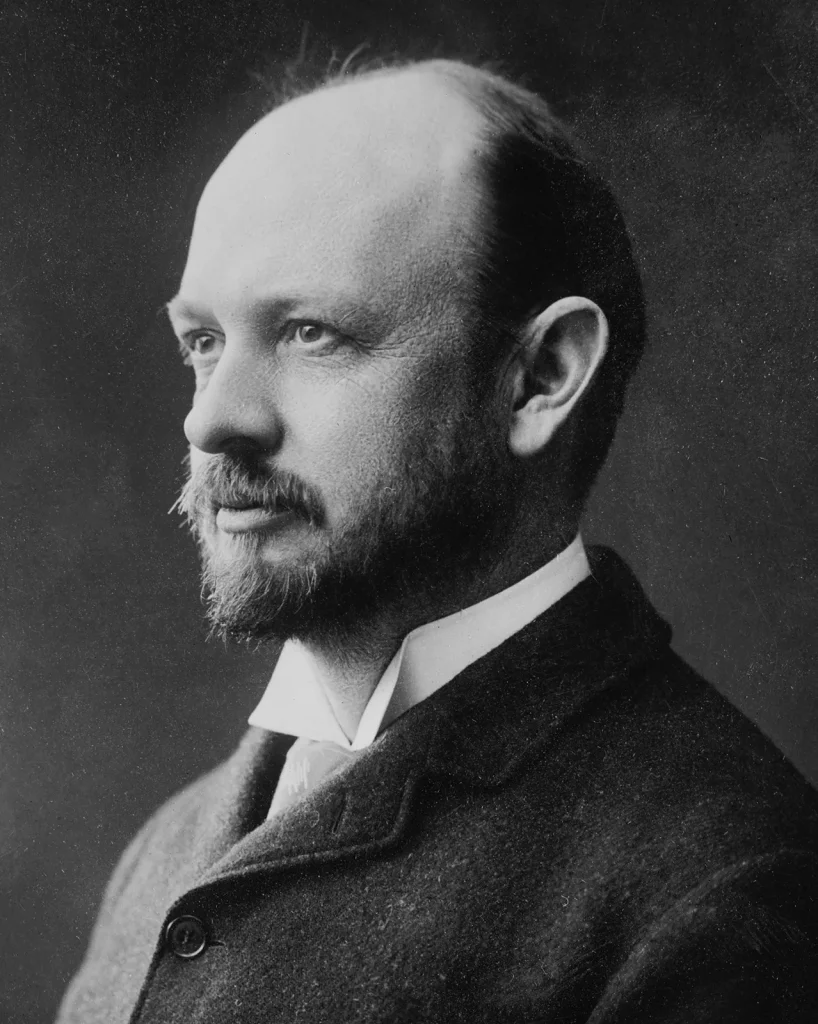

In astrophotography, the Pickering scale refers to a system used to quantify and describe the visibility of details in astronomical images. Developed an American astronomer William H. Pickering (1858–1938) of Harvard College Observatory, using a 5″ (13 cm) refractor. This scale is particularly relevant for lunar and planetary observations. The Pickering scale typically ranges from 1 to 10, with higher numbers indicating better seeing conditions and finer detail visibility.

Astrophotographers and astronomers often refer to the Pickering scale when assessing the quality of their observations. And determining the best times for imaging celestial objects. It helps astrophotographers gauge the atmospheric conditions and adjust their imaging setups to capture the best possible images.
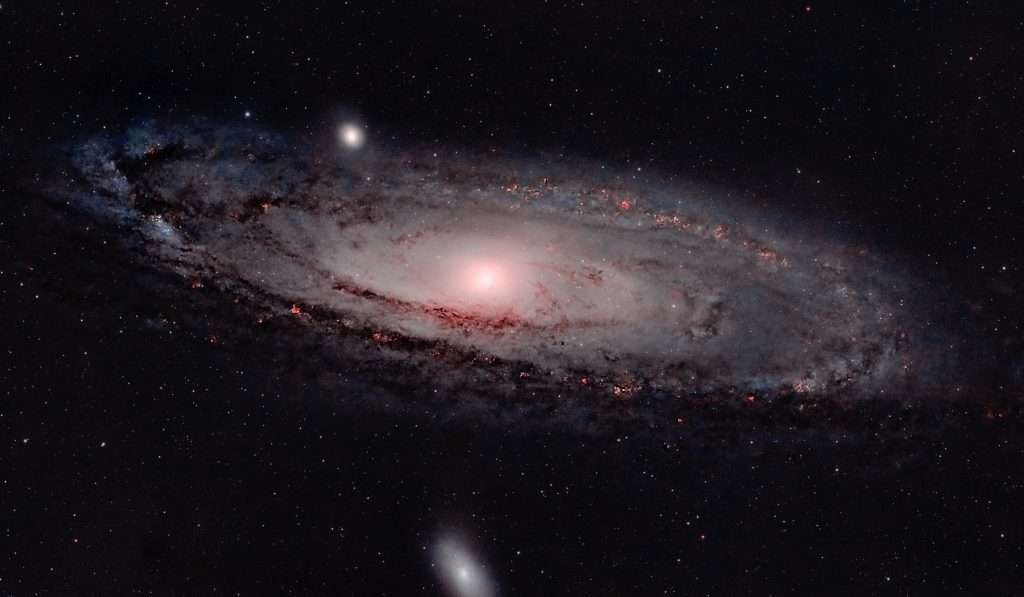
The Andromeda Galaxy is located in the constellation of andromeda with a bright core is visible to the naked eye under dark skies. Andromeda is the nearest spiral galaxy to our own milky way and the farthest object that can be seen with the naked eye. It lies at a distance of approximately 2.537 million light-years.
In around 4 billion years, the Andromeda galaxy is projected to collide with the Milky Way. This event is known as the Andromeda–Milky Way collision. This will result in the formation of a single larger galaxy.
An earlier image of the andromeda galaxy