Insecta, Nature / January 20, 2025 / 1 minute of reading
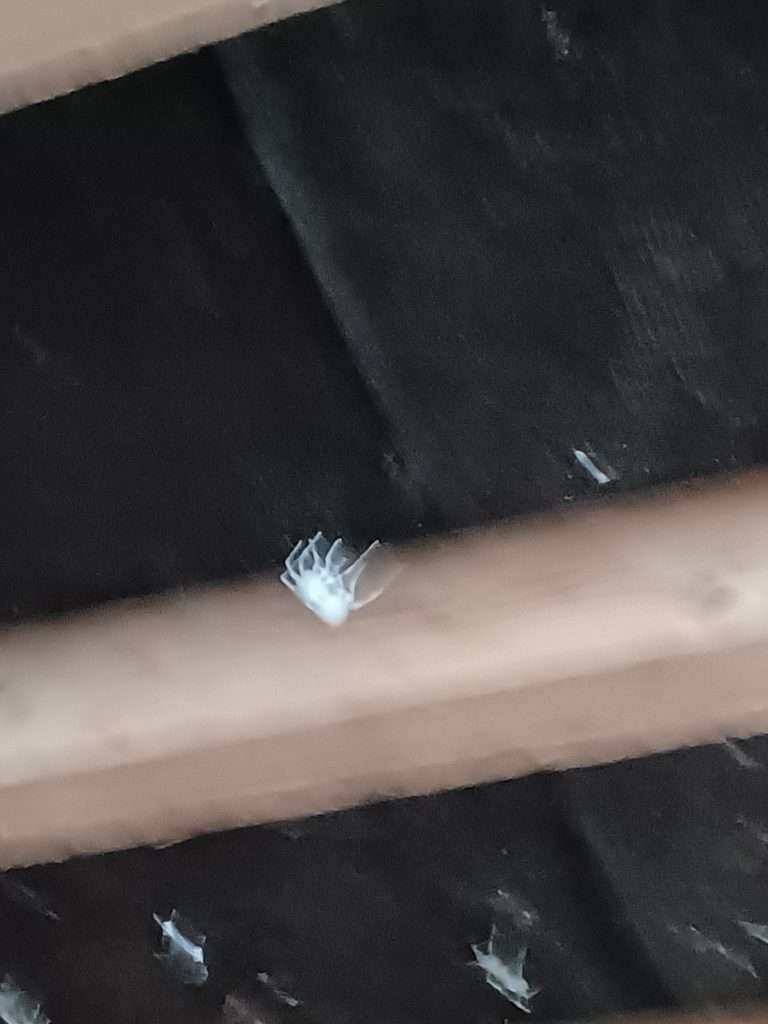
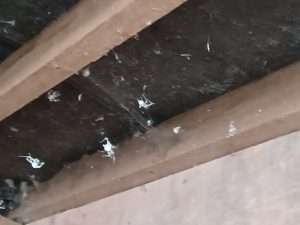
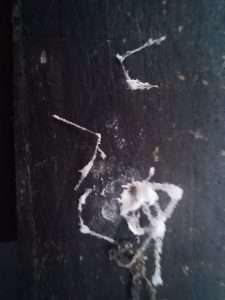
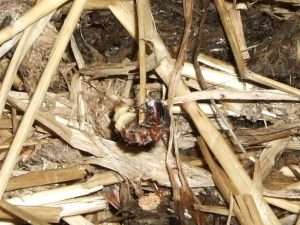
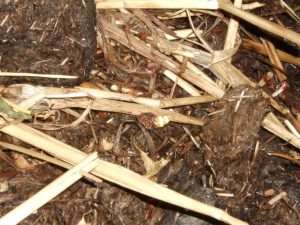
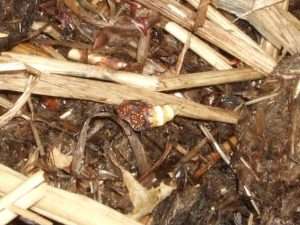
These are actually ordinary long bodied cellar spiders (family Pholcidae), but have been taken over, and killed by a white fungus. Probably a type of Engyodontium. This sounds rather like a horror story but the fungus ‘takes over’ the spiders and leaves a dead, white husk – ours were all dead when I found them but it seems that during the take-over the spiders can still move around and are more akin to zombies! Nature is so strange…
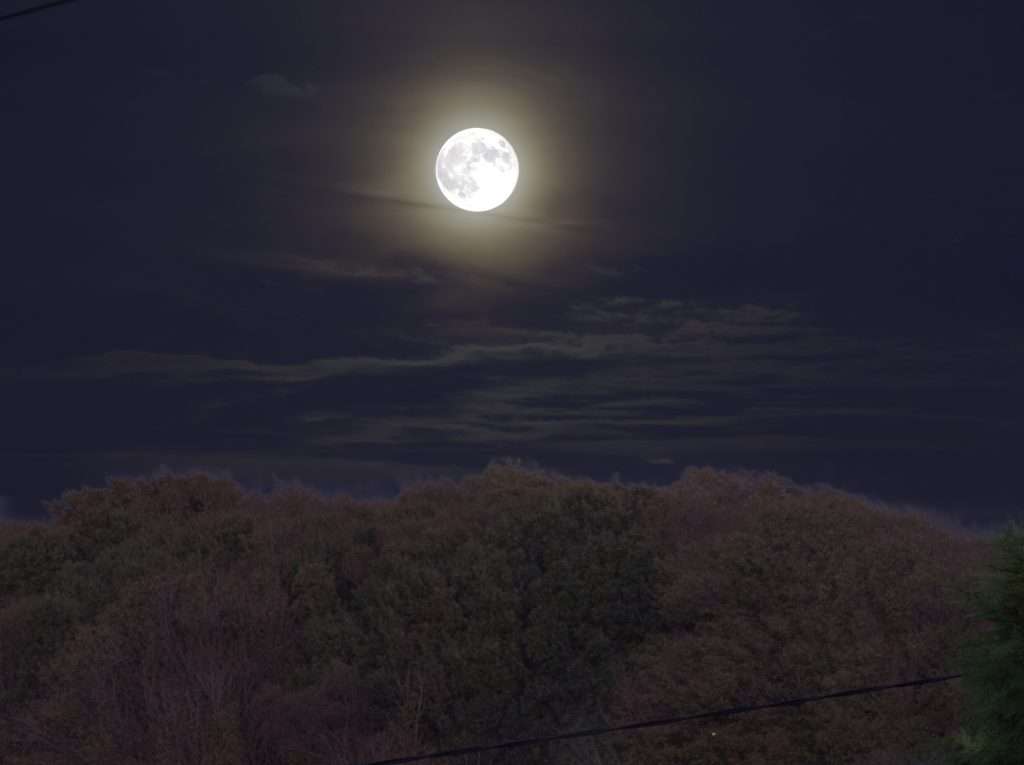
The Hunter’s Moon is traditionally given to the full moon that occurs after the Harvest Moon. This is the full moon closest to the autumnal equinox (around September 22-23). This full moon typically appears in October, though occasionally, it can fall in early November.
Origins of the Name
The name comes from traditional agricultural and hunting practices. After the harvest, hunters took advantage of the bright moonlight to hunt game, which was often easier to spot in fields cleared of crops. This was important for preparing food stores for the winter.
Unique Characteristics
Bright and Early Rise: This autumnal moon rises around the same time as the sun sets, providing extra illumination for several nights. This happens because the moon’s orbit during this time of year has a relatively shallow angle to the horizon.
Larger and More Colorful Appearance: While the Moon is not actually larger or closer to Earth, it may appear bigger or more colourful (orange or red) when it is near the horizon. This effect is due to the Earth’s atmosphere scattering shorter wavelengths of light.
The Hunter’s Moon, like other full moons, has been a subject of folklore, cultural traditions, and celestial observation throughout history.
This image is a one-shot photograph looking east from our house on the South Coast and taken on October 17, 2024. With a Canon R10 and standard kit lens and processed in Affinity Photo. Affinity Photo was used to calm the moon’s brightness and bring up the foreground woodland.
William Shakespeare and The Hunter’s Moon
William Shakespeare mentioned the Hunter’s Moon in his play “Henry IV, Part I.” In Act I, Scene 2, the character Falstaff humorously refers to the Hunter’s Moon:
“Dost thou not see, thou knave, that it is past ten o’clock, and the moon shines fair? Thou sayest true; the moon shines fair; you are a leader of the moonshine company.”
Though Falstaff doesn’t explicitly say “Hunter’s Moon,” this phrase often refers to the bright, autumnal full moon that would have been familiar in Shakespeare’s time. Shakespeare’s works frequently allude to natural phenomena, including lunar phases, but his specific reference is tied more to poetic imagery and interpretation rather than naming it directly.
Landscapes / October 13, 2024 / 1 minute of reading
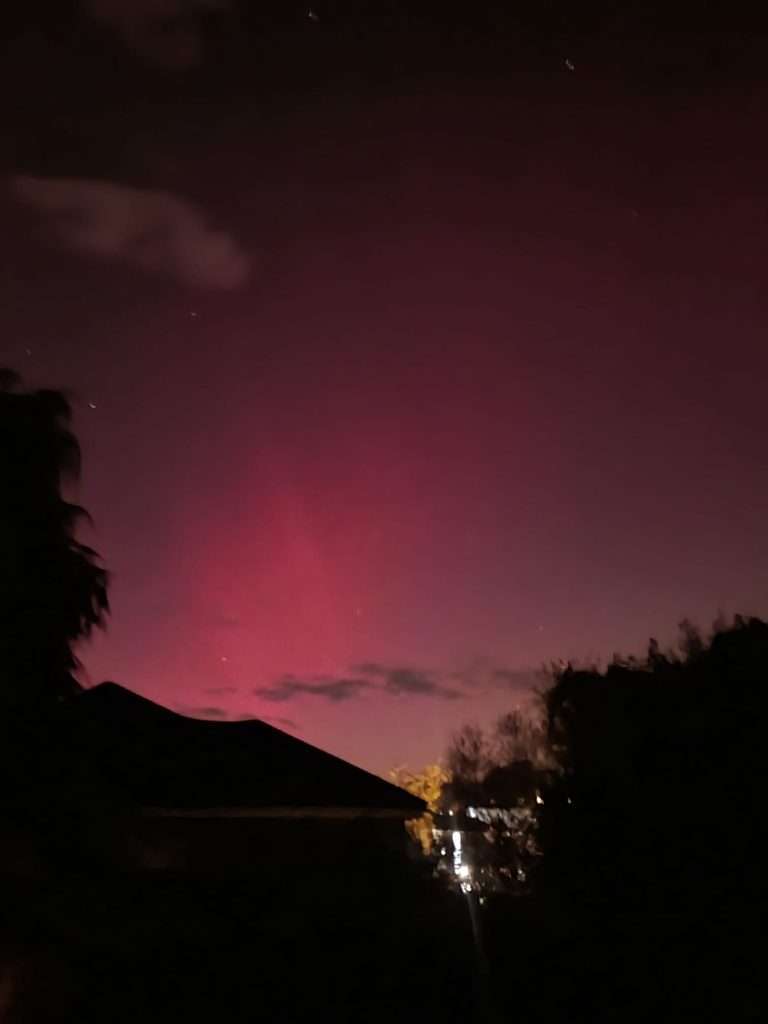
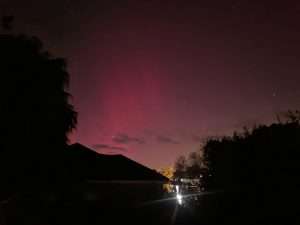
2024 has been a good year for viewing Aurora even in the South of England. These were taken on 11th October. Some of this could be seen with the naked eye, but a good mobile phone will pick up more of the colour. My daughter took this one with her Samsunt. I suspect I will have some more to post soon – going to try with my canon camera next time.
Insecta / September 28, 2024 / WildLife / 2 minutes of reading
Glow worms (Lampyris noctiluca)
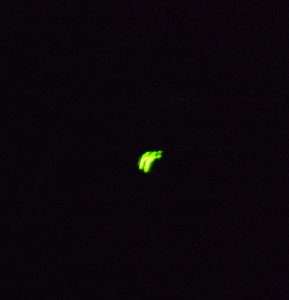
Glow worms (Lampyris noctiluca) are actually beetles! Females cannot fly but set off this brilliant glow (bioluminescence) to attract the flying males. They have a two-year lifecycle so their few days of glowing are nearly the end of their lives. They will lay their eggs if they successfully mate and then die. We have been really lucky to have them in both our gardens in the South of England. The environment has to be just right for them to be successful. You may find them if you are walking at the right time of night, June and July being the best time of year. I first realised we had them when I saw what I first thought was a discarded battery light – then got closer…
About Glow-worms
They do not like to be disturbed and will crawl further down the grass blades if they catch the vibration of potential predators. So you must tread softly to get closer. They require a very natural, undisturbed environment to breed, so please no pesticides, herbicides etc.
If you get very close you can see that the green glow comes from segments on the body. If you see the glow for a few nights you will notice that the segments get ‘used up’ and the glow fades. Unfortunately, this may mean the female has failed to mate. Males cannot fly well in rainy weather so you will normally only see the females glowing on a dry night.
Good for the garden!
Guess what – the larvae eat slugs and snails. So welcome them to your garden if you are lucky enough to have them – by keeping it poison-free.
Insecta / September 26, 2024 / WildLife / 1 minute of reading
This year has been really bad for butterflies, with The Big Butterfly Count indicating that the average number of butterflies seen fell to 7 (12 the previous year) with many species showing over 50% decline. Certainly we only saw a few this year, unlike previous years where our Budlejas have attracted multiple butterflies at each count.
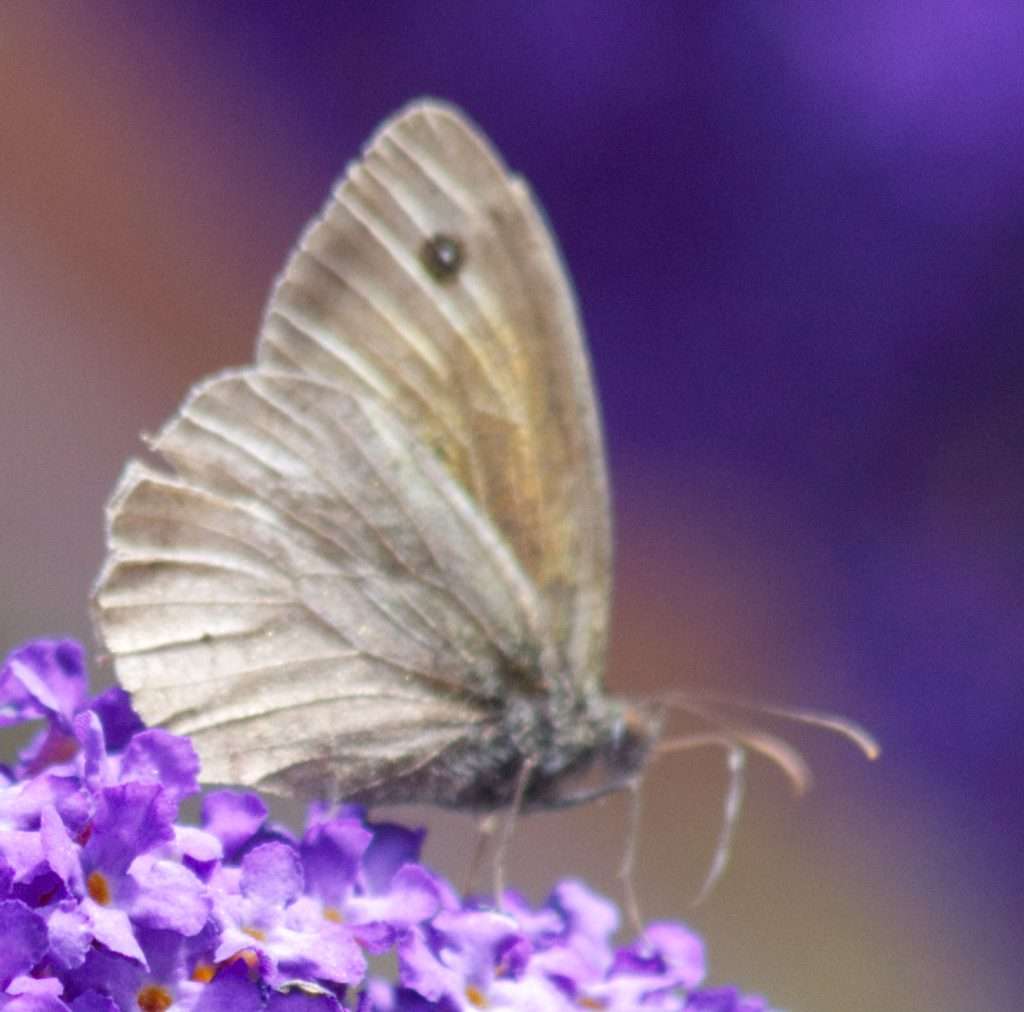
The Meadow Brown (Maniola jurtina) is one of the most common and widespread butterflies in Europe and parts of Asia. It is often found in a variety of habitats, particularly in grassy areas like meadows, fields, and parklands, hence its name. However, this year it was certainly not very common! A clear indication that there are problems and we need to take action.
Flora / September 26, 2024 / WildLife / 1 minute of reading
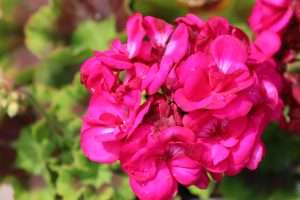
The picture does not do it justice. These flowers are HUGE. The bees loved them (although bees seem to be in trouble too this year so we did not get as many as in previous years). There are some who say we should not have Rhododendron’s in the garden in the UK, as they are not native and can reduce the number of native plants. However, as with all things perhaps a mix is a good idea. We are fortunate to have a large garden so rather than dig up these lovely flowers we have been adding some native plants to the area.
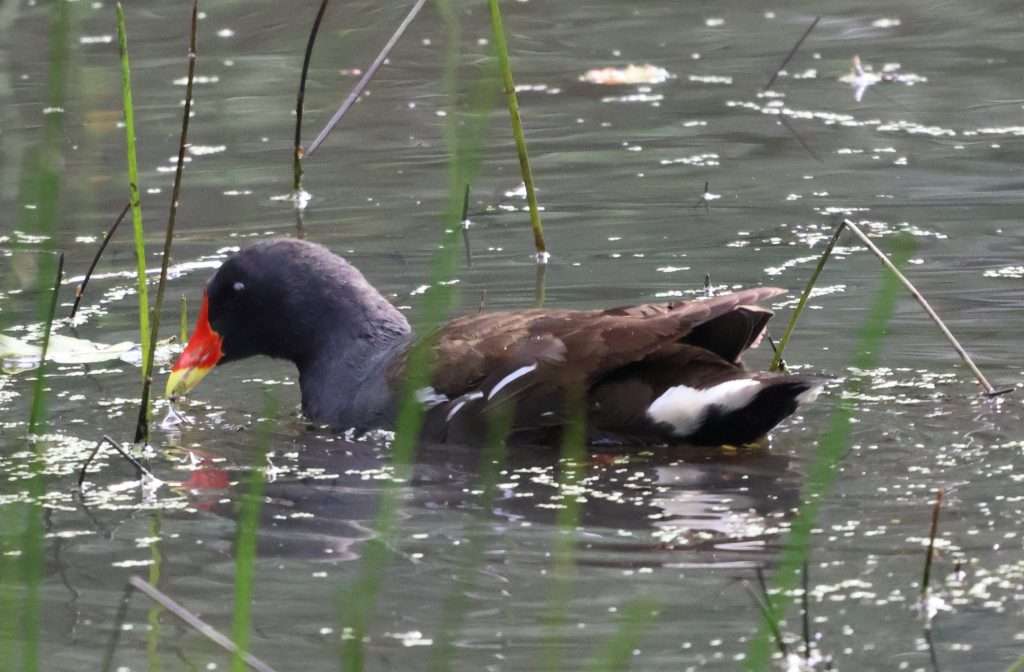
For the first time this year we have two families of Moorhens (Gallinula chloropus) living with us (as well as the Mallards). Moorhens are quite skittish, disappearing from view in a mad dash for the reeds whenever anyone or anything disturbs them. Perhaps this reason they seem to have been fairly successful. The babies do look really cute, and are now as big as their parents. All literally skim across the pond to get into hiding unless I am really quiet!
The other thing about Moorhens is their call (especially the alarm call). It actually sounds a bit like a dog toy squeeking!
Here is a bit of information about Moorhens: Moorhens, also known as Gallinula chloropus or the common moorhen, are medium-sized water birds commonly found in wetlands, lakes, ponds, and slow-moving rivers. They belong to the rail family (Rallidae) and are widespread across Europe, Asia, Africa, and the Americas.
Appearance: They have a distinctive black or dark brown plumage with a white stripe along the flanks and a red or orange bill that fades to yellow at the tip. Their legs are often a striking greenish-yellow.
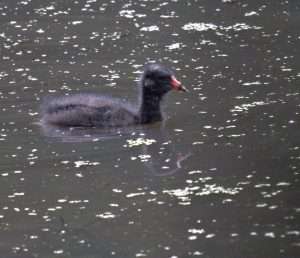
But the babys as always are ‘cryptic’ – still look cute though:
Behavior: Moorhens are excellent swimmers although when they are going at speed (which is usually their style if they see danger) they are actually paddling on the water’s surface. Despite their aquatic lifestyle, they are also good walkers and can be spotted walking on land near water bodies. Unlike many water birds, moorhens don’t have webbed feet. Instead, they have long toes that help them walk on muddy or uneven ground. (This may explain the way they seem to walk on top of the water when really in a hurry – their ‘chicken’ feet work really well at getting them across the top of the water!) In the Netherlands the common name for these birds is ‘Water Kip’ – meaning water chicken, which fits well.
Diet: They are omnivores, feeding on aquatic plants, small fish, insects, and even seeds. Moorhens are opportunistic feeders and will eat what is available, making them highly adaptable to different environments.
Nesting: Moorhens build floating nests made of reeds or other aquatic vegetation. They are protective parents and will aggressively defend their nests and young from predators. Both males and females participate in incubating the eggs and raising the chicks.
Vocalizations: They have a range of calls, including loud, sharp “kik” sounds and clucks, often heard when they feel threatened or communicate with other moorhens. In my opinion, it really does sound like a squeeky dog toy)
Moorhens are known for their resilience and adaptability, which allows them to thrive in a variety of aquatic environments, even in urban settings.
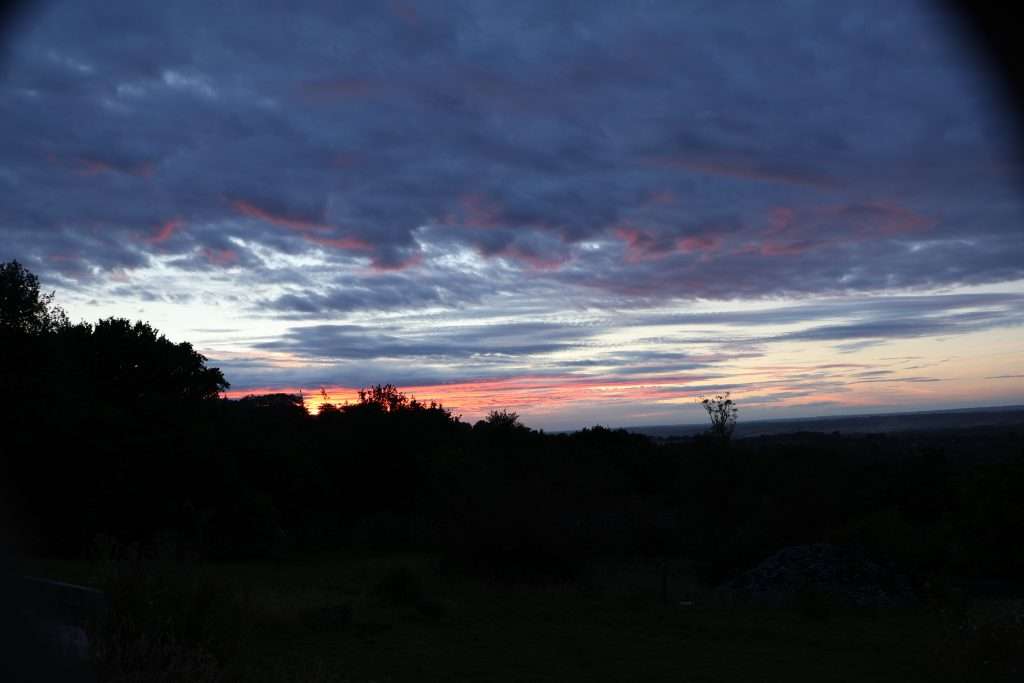
We are fortunate being so high up on a hill we have wonderful views of the skies and sunsets are often spectacular, this night all of the clouds were taking on a red hue, the photo probably does not do it justice!
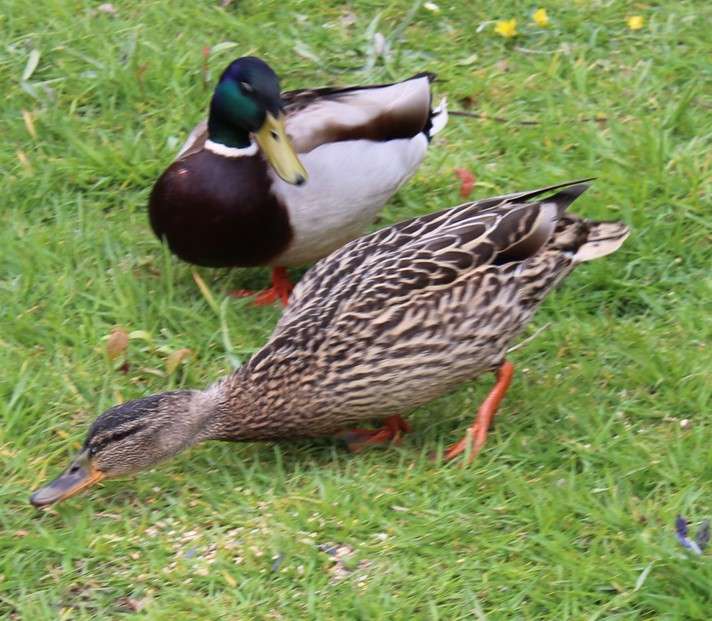
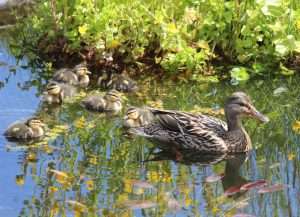
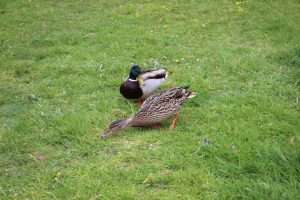
Every year a male and female mallard fly back to our pond and stay to breed. They have become quite tame and come to us for seeds every day. Most years they bring us 6-8 ducklings to show off, but only one or two survive. This is very typical. I think the ‘children’ are also coming back as each year we seem to have a couple more.
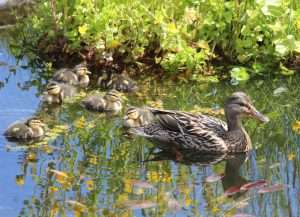
Here is a picture of Mom with babies earlier in the year:
Mallard ducks (*Anas platyrhynchos*) are one of the most recognizable and widespread duck species in the world. Known for their distinctive coloring and adaptability, they are the ancestors of most domestic duck breeds. Here are some key facts about Mallard ducks.
About Mallards
1. Appearance: – Males (Drakes): The male Mallard is easily identified by its iridescent green head, bright yellow bill, and a distinctive white neck ring. They have a chestnut-brown chest, gray body, and a distinctive blue patch (speculum) bordered by white on their wings. – Females (Hens): Female Mallards are mottled brown with an orange bill marked with black. They have a subtler appearance, which provides camouflage while nesting. This is referred to as ‘cryptic’. – **Both Sexes: Both males and females have bright orange legs and the blue wing speculum.
2. Habitat: Mallards are highly adaptable and can be found in a variety of wetland habitats, including ponds, lakes, rivers, marshes, and even urban parks. They are native to the Northern Hemisphere but have been introduced to other regions, including Australia and New Zealand.
3. Diet: Mallards are omnivorous and have a varied diet that includes aquatic vegetation, insects, small fish, and crustaceans. They are dabbling ducks, meaning they feed mainly on the water’s surface or by tipping forward to reach underwater plants. We feed them wild bird seeds, as bread is not good for ducks. We have seen them ducking for insects and also pinch a couple of small fish!
4. Behavior: – Social Structure: Mallards are generally social birds that can be seen in pairs or small groups. Outside of the breeding season, they often form large flocks. – Mating: Mallards are seasonally monogamous, forming pairs in the fall and winter. Yet somehow, the female seems to turn up with a male and both appear fairly tame, perhaps she tells them we are safe! The males court females through displays that include head-bobbing and vocalizations. We often see two or three males chasing after our female, and have also seen our female ‘hiding’ in the reeds with one of the males to avoid the others! – Vocalizations/calls: Mallards are known for their quacking, especially the females. Males produce softer, raspy calls. They kick up quite a row when there is danger around, such as foxes!
5. Breeding: Female Mallards build their nests on the ground, often near water but sometimes in more unexpected places like gardens or rooftops. They lay 8-13 eggs, which hatch after about 28 days. The ducklings are precocial, meaning they are born with down feathers and are able to swim shortly after hatching. However, they are clearly in need of a lot of help until they are able to fly for themselves, which will be late summer. Our regular female seems to have got better at looking after them over the years, but still loses a lot to all the predators around, which includes Herons and foxes.
6. Migration: Mallards are partially migratory, with northern populations migrating south in the winter. They have strong flight capabilities and are known to travel great distances during migration. As we live in the South of England, they are with us most of the year.
7. Conservation Status: Mallards are classified as a species of Least Concern by the IUCN. However, they face challenges from habitat loss, pollution, and hybridization with other duck species, particularly in areas where domestic ducks are released into the wild.
Mallards play a vital role in their ecosystems as both prey and as herbivores that help maintain aquatic vegetation. They are also important for birdwatching, hunting, and as a model species in ecological studies.
Mallard ducks are a familiar and charismatic species that thrive in a variety of environments. Their adaptability has made them a successful species, closely associated with human-altered landscapes. We are so lucky that they seem happy to live with us for most of the year, and keep returning. I think it is fair to say they are relatively easy to tame, compared to other wild birds – they come up every day from the pond to our lawn to ask for seeds.